
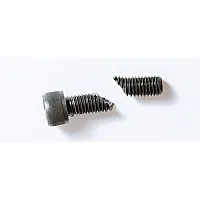
The Most Common Mistakes When Using Stainless Steel Fasteners (And How to Avoid Them)
Stainless steel fasteners have a fantastic reputation. They resist corrosion, look great, and are often seen as a “fit-and-forget” solution. Because of that, people tend to assume they’re foolproof.
They’re not.
In reality, stainless fasteners fail more often than many expect — not because stainless steel is unreliable, but because it’s frequently misunderstood. Most problems stem from selection, installation, or handling errors.
Let’s walk through the mistakes that cause the most headaches (and how you can avoid them).
Galling: The Silent Fastener Killer
If you’ve ever tightened a stainless bolt only to have it lock solid halfway through, you’ve met galling.
Galling happens when friction causes microscopic welding between threads. Instead of sliding smoothly, the threads tear and fuse together.
Why it happens:
Stainless steel naturally forms a protective oxide layer. Under pressure and heat (like during tightening), that layer can break down. When bare metal contacts bare metal, adhesion occurs.
How to avoid it:
Lubrication is your best friend. Anti-seize compounds dramatically reduce friction. Tightening more slowly also helps by minimizing heat buildup. Clean threads are equally important — dirt increases friction fast.
“Stainless” Does Not Mean “Rust-Proof”
This one catches a lot of people off guard.

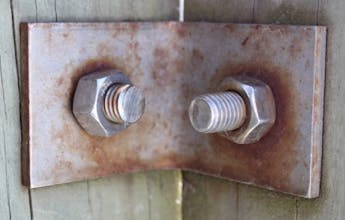

Yes, stainless steel resists corrosion — but environment matters.
Why it happens:
Different stainless grades behave very differently. A2 (304) is excellent for general use but struggles in chloride-rich environments like coastal areas. A4 (316) performs much better around salt and chemicals.
How to avoid it:
Choose the grade for the environment, not just the label “stainless.” If moisture, salt, or chemicals are involved, material selection becomes critical.
Mixing Metals Without Thinking About Galvanic Corrosion
Stainless steel often gets paired with aluminum, carbon steel, or other metals. That’s fine — until moisture enters the picture.
Why it happens:
When dissimilar metals are electrically connected in a wet environment, galvanic corrosion can occur. One metal sacrifices itself to protect the other.
How to avoid it:
Isolate the materials. Nonconductive washers, sleeves, or coatings break the electrical pathway. Compatibility charts are also incredibly useful during design.
Over-Tightening Stainless Fasteners
Stainless fasteners often feel different during tightening — smoother, sometimes softer. That leads many installers to apply more torque than they should.

Why it happens:
Many stainless grades have lower yield strength than hardened alloy steels. Excess torque stretches or damages threads.
How to avoid it:
Use torque-controlled tools whenever possible. “Tight by feel” is where most damage occurs. Proper torque specs make a huge difference.
Choosing Stainless Steel Without Checking Strength Requirements
Stainless is sometimes selected purely for corrosion resistance, even when strength is the dominant requirement.
Why it happens:
Not all stainless steels are high-strength materials. Substituting stainless for hardened steel without verification can weaken a joint.
How to avoid it:
Balance corrosion resistance and mechanical performance. High-strength stainless options exist — but they must be intentionally specified.
Poor Storage and Handling Practices
Stainless steel can actually “rust” because of contamination.
Why it happens:
Contact with carbon steel particles embeds iron into the surface. Over time, those particles corrode, creating the illusion that stainless steel is failing.
How to avoid it:
Keep stainless fasteners separated from carbon steel. Clean storage bins and dedicated tooling go a long way.