
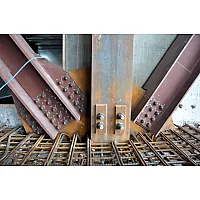
The Importance of Structural Steel and Cladding Fasteners

Structural steel and cladding fasteners are often overlooked components in modern construction, yet they play a decisive role in ensuring the safety, durability, and performance of buildings. While beams, columns, and panels receive most of the attention in design and architecture, it is the fasteners—bolts, screws, anchors, and rivets—that hold everything together and allow structures to function as a unified system.
The Backbone of Structural Integrity
Structural steel is widely used due to its strength, flexibility, and efficiency in carrying loads. However, steel members alone cannot perform without reliable connections. Fasteners serve as the critical links between beams, columns, and other load-bearing elements. They transfer forces such as tension, shear, and compression throughout the structure.
Poorly designed or installed fasteners can lead to joint failure, which may compromise the entire structure. In high-load environments—such as bridges, high-rise buildings, and industrial facilities—the integrity of every connection is essential. Even a single failed fastener can initiate progressive failure, making their quality and testing a top engineering priority.
Ensuring Stability in Cladding Systems
Cladding fasteners play a different but equally important role. Cladding systems—used for external walls and roofs—protect buildings from environmental elements like wind, rain, and temperature fluctuations. The fasteners used in these systems must withstand dynamic loads, including wind uplift and thermal expansion.
If cladding fasteners fail, panels can detach, posing safety hazards and exposing the building envelope to moisture and corrosion. Proper fastening ensures that cladding remains secure, maintains insulation performance, and contributes to the building’s energy efficiency.
Resistance to Environmental and Mechanical Stresses
Fasteners must endure a range of stresses over their service life:
Mechanical loads: Vibrations, impacts, and cyclic fatigue.
Environmental exposure: Corrosion due to moisture, chemicals, and pollution.
Thermal effects: Expansion and contraction from temperature changes.
To address these challenges, fasteners are often manufactured from high-strength materials and treated with protective coatings such as galvanization or stainless steel finishes. Selecting the right fastener for the environment is essential to prevent premature failure.
Precision, Installation, and Quality Control
The performance of fasteners depends not only on design but also on installation. Incorrect torque, misalignment, or over-tightening can reduce their effectiveness. This is particularly critical in structural steel connections, where preload must be carefully controlled to achieve the desired clamping force.
Quality assurance processes—such as torque testing, inspection, and adherence to engineering standards—help ensure that fasteners perform as intended. Regular maintenance and inspection are also necessary, especially in structures exposed to harsh conditions.
Economic and Safety Implications
Fasteners may represent a small fraction of the total construction cost, but their impact is disproportionately large. Investing in high-quality fasteners reduces maintenance costs, extends the lifespan of structures, and minimizes the risk of costly repairs or failures.
From a safety perspective, reliable fasteners protect not only the structure but also the people who use and occupy it. In façade systems, secure cladding prevents falling debris, while in structural systems, strong connections prevent catastrophic collapse.
Supporting Modern Construction Innovations
As construction evolves, so do fastening technologies. Modern developments include:
High-performance bolts for heavy structural loads.
Self-drilling screws for efficient cladding installation.
Smart fasteners with monitoring capabilities.
Corrosion-resistant materials for extreme environments.
These innovations support faster construction, improved safety, and enhanced building performance.
Conclusion
Structural steel and cladding fasteners are fundamental to the success of any construction project. They ensure that structures remain stable, safe, and resilient under various conditions. Despite their small size, their role is immense—acting as the unseen forces that bind modern architecture together. Recognizing their importance and investing in their proper design, selection, and installation is essential for building structures that stand the test of time.