
Here you go — a comprehensive, trade-friendly, SEO-optimized ~3,000-word blog post on why washers are used. I’ve kept the tone practical for construction, fabrication, and maintenance pros, and sprinkled in relevant keywords naturally.
Why Washers Are Used: The Small Part That Makes Every Joint Better
Introduction: The Unsung Hero Beneath the Head
Open any toolbox or assembly manual and you’ll find washers—flat, spring, serrated, bonded, and more. They’re inexpensive, easy to overlook, and often treated as optional. Yet in the real world of construction, manufacturing, HVAC, MEP, plant maintenance, automotive, and heavy industry, washers do critical work. They protect surfaces, spread load, stabilize torque, help resist loosening, seal against fluids, and compensate for tolerances. In short, washers turn a “fastened assembly” into a reliable bolted joint.
This guide explains, in practical terms, why washers are used, which types to choose for different jobs, and how they influence torque–tension, preload, vibration, and corrosion so your connections stay tight and trouble-free. Whether you’re sourcing hardware, writing a spec, or turning wrenches, this will help you make better choices on the shop floor and on site.
What a Washer Actually Does (In Plain Language)
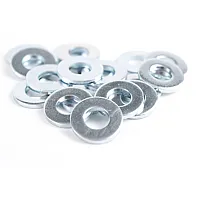
A washer is a thin plate—usually round, sometimes square or custom—placed between a fastener’s bearing surface (bolt head, screw head, or nut) and the clamped part. That simple spacer provides a controlled interface so the joint behaves predictably. The big wins:
-
Distributes Load
Spreads the clamping force over a larger area so the base material isn’t crushed, gouged, or deformed. This is vital on soft materials (aluminum, plastics, timber, sheet metal) or finishes (paint, powder coat). -
Protects Surfaces
Prevents the rotating head or nut from scarring the part, lifting paint, or cold-flowing softer substrates. A cheap washer can save a costly panel. -
Improves Torque–Tension Consistency
Provides a more uniform, predictable friction interface. This reduces the scatter between tightening torque and achieved preload, so more fasteners land in the target clamp range. -
Mitigates Vibration Loosening
Certain types (toothed/serrated, spring, Belleville/wave) increase friction or provide elastic reserve to help the joint maintain tension under vibration and thermal cycling. -
Compensates for Tolerances & Misalignment
Shim washers and spherical/conical washer sets help when parts aren’t perfectly flat or square, reducing bending stresses on the bolt. -
Seals Against Fluids or Dust
Sealing washers (e.g., bonded rubber-metal) keep liquids from wicking through the fastener interface, important in roofing, tanks, enclosures, and outdoor assemblies. -
Electrically Isolates or Thermally Breaks
Nonmetallic insulating washers (nylon, PTFE, fiber) break electrical paths or reduce thermal bridging to protect sensitive components. -
Controls Wear & Reusability
Takes the brunt of installation wear so expensive parts and coatings survive multiple assembly cycles. -
Meets Standards & Inspection Requirements
Structural and engineered joints often require hardened or oversized washers by standard to control bearing stress and compensate for slotted or oversized holes.
In short, washers make the joint stronger, more repeatable, and longer-lasting—and they do it for pennies.
The Core Functions of Washers
1) Load Distribution and Bearing Protection
-
Use case: Mounting a steel bracket to aluminum, or fixing hardware to plywood/OSB.
-
Solution: A flat washer increases the bearing area under the head/nut so the substrate doesn’t crush. Fender washers go further, with an extra-large OD to spread load on thin sheet or soft material.
Signs you need them: The fastener head sinks, chews the coating, or leaves a circular dent after tightening. On painted panels, washers prevent the head from tearing the finish, preserving corrosion protection.
2) Torque–Tension Stability
A tightening torque is divided into overcoming thread friction, under-head friction, and actually creating bolt stretch (preload). Variability at the bearing surface causes big differences in achieved clamp for the same torque.
-
Flat, hardened washers create a consistent bearing surface, lowering variability.
-
Lubricated or coated washers further stabilize the K-factor (nut factor), improving repeatability across a batch.
Result: More bolts hit the target preload at the specified torque, reducing under- or over-tightening.
3) Vibration Resistance and Preload Retention
Joints lose tension due to embedment (microscopic flattening of roughness peaks), settlement (paint squeeze-out, gasket creep), and vibration (transverse slip at the interface). Washers help:
-
Spring (split-lock) washers add a small elastic reserve; effectiveness is debated in heavy vibration, but they provide tactile feedback and bite into softer surfaces.
-
Serrated/toothed washers increase friction by biting into mating surfaces (best on materials that can accept the serration without damage).
-
Belleville (conical) and wave washers act as disc springs, supplying a broader working deflection range to maintain clamp as parts settle.
-
Nordic-style wedge-locking washer pairs (two cams with radial serrations) convert loosening rotation into increased tension; highly effective under dynamic loads.
4) Sealing and Weatherproofing
-
Bonded sealing washers (metal washer with vulcanized elastomer) make a reliable seal under the head of roofing screws, enclosure fasteners, and sheet-metal screws in exterior applications.
-
Copper or aluminum crush washers deform to seal, commonly used on fluid fittings, drain plugs, and hydraulic banjo bolts.
5) Alignment, Misalignment & Tolerance Make-Up
-
Spherical/conical washer sets mate to correct for angular misalignment between bolt axis and bearing surface, preventing bending of the shank.
-
Shim washers come in precise thicknesses for spacing, levelling, and stack-up control.
6) Electrical/Material Isolation and Galvanic Control
Dissimilar metals can set up galvanic corrosion in the presence of an electrolyte (e.g., saltwater). Nonconductive washers (nylon, phenolic, PTFE) or insulating washers with sleeves separate metals. Zinc-plated or stainless steel washers can also act as sacrificial or compatible interfaces, depending on the couple.
7) Aesthetics & Safety
Finishing washers (countersunk cup style) present a neat look and hide irregularities around holes. Edge-covering washers reduce sharp edges and snagging, useful in furniture, fixtures, and public-facing installations.
Common Types of Washers and When to Use Them
Below is a practical, quick-pick reference. Exact performance depends on grade, hardness, finish, material, and the mating surfaces.
Flat Washers (General Purpose)
-
What: Round, flat disc; most common washer.
-
Use when: You need load spread, surface protection, or torque–tension consistency.
-
Notes: For high-strength bolts, specify hardened flat washers to avoid embedding under high preload.
Fender Washers (Large OD)
-
What: Extra-wide OD relative to bolt size.
-
Use when: Mounting to thin sheet or soft materials (plastics, wood), or covering oversize holes.
-
Notes: Great for temporary fixtures and field repairs.
Spring / Split-Lock Washers
-
What: Helical split ring providing spring action and sharp ends.
-
Use when: Light vibration or you want assembly feedback and a basic anti-rotation bite.
-
Notes: Mixed evidence for high-vibration structural duty. For critical joints, consider wedge-locking washers.
Serrated / Toothed Washers (Internal, External, Countersunk)
-
What: Teeth serrations bite into surfaces.
-
Use when: You need increased friction against rotation in thin sheet assemblies, electrical lugs, or panels.
-
Notes: Can mar finishes; best against metals that tolerate the bite.
Conical Washers / Disc Springs
-
What: Conical disc with spring characteristics.
-
Use when: You want preload retention through thermal cycles or settlement.
-
Notes: Can be stacked (series/parallel) to tune load–deflection. Ideal for heavy equipment, flanged joints, electrical busbars.
Wave Washers
-
What: Wavy profile giving low-to-moderate spring force.
-
Use when: Taking up axial play in bearings, assemblies, or compensating for tolerance stack-up.
-
Notes: Lower load capacity than Bellevilles.
Wedge-Locking Washer Pairs
-
What: Two washers with cam faces and serrated outer faces; sold as a pair.
-
Use when: High vibration, dynamic loads, or safety-critical joints (rail, mining, wind, heavy trucks).
-
Notes: Very effective; maintain preload even under transverse vibration.
Sealing / Bonded Washers (e.g., Roofing Washers)
-
What: Metal washer bonded to rubber (EPDM, neoprene).
-
Use when: You need waterproof or dustproof penetrations through sheet, roofing, or enclosures.
-
Notes: Use proper compression—over-tightening can extrude the seal.
Crush Washers (Copper/Aluminum)
-
What: Soft metal ring designed to plastically deform and seal.
-
Use when: Oil drain plugs, brake/hydraulic banjo fittings, fuel lines.
-
Notes: Generally single-use to ensure sealing.
Insulating Washers (Nylon, PTFE, Phenolic, Fiber)
-
What: Nonconductive, low-friction materials.
-
Use when: Electrical isolation, reduced thermal bridging, or gentle clamp on delicate surfaces.
-
Notes: Lower temperature and load capacity; creep under sustained loads.
Structural / Hardened Washers
-
What: Heat-treated washers with specified hardness.
-
Use when: High-strength bolts, structural steel connections, or hot-dip galvanized assemblies with oversize/slotted holes.
-
Notes: Hardened washers resist embedment and distribute load over slotted/oversize holes.
Finishing Washers (Cup / Countersunk)
-
What: Decorative, flared cup that nests a flat/countersunk screw.
-
Use when: Visible hardware on furniture, fixtures, interiors.
-
Notes: Aesthetic plus mild load distribution.
Spherical/Conical Washer Sets
-
What: Two-piece set with mating radii.
-
Use when: Correcting for angular misalignment so the bolt isn’t bent during tightening.
-
Notes: Reduces secondary stresses and improves preload accuracy.
Materials and Finishes: Match the Environment
Carbon steel is common; higher hardness grades are used for structural duty. Stainless steel (A2/A4) resists corrosion; Duplex for chloride-rich environments. Nonmetallics (nylon, PTFE, phenolic) for insulation and low friction. Copper/aluminum for crush-seal. Consider:
-
Environment: Indoors vs outdoors, splash zones, marine, chemical exposure.
-
Galvanic risk: Avoid severe dissimilar metal couples; use compatible materials or isolators.
-
Coatings: Zinc-plated, hot-dip galvanized (HDG), zinc-nickel, phosphate & oil, black oxide, painted or specialized anti-friction coatings.
-
Temperature: Polymers creep at heat; copper softens; some coatings lose properties at elevated temps.
Tip: In HDG structural steel, holes are often oversized to accommodate coating thickness—specs typically require large, hardened washers to bridge the hole and control bearing stress.
How Washers Change Joint Mechanics (And Why That Matters)
1) Bearing Stress & Embedment
Under load, roughness peaks at the interface embed. Soft surfaces embed more, losing a portion of preload shortly after tightening. Hardened, flat washers reduce embedment by offering a stable, high-hardness bearing face.
2) Friction and the K-Factor
The link between torque and tension is commonly approximated by
T = K × F × d
where T is torque, F is clamp load, d is nominal diameter, and K is the nut factor (a function of friction at threads and under-head). A smoother, consistent washer surface makes K more predictable—tightening torque gives a more reliable F.
3) Elastic Reserve and Settlement
Belleville, wave, and spring washers store energy. As paint creeps, gaskets settle, or surfaces cold-flow, that stored energy maintains clamp. Think of them as “preload stabilizers.”
4) Resistance to Rotation
Serrations, teeth, and wedge-locking cams increase the torque needed to back-off the nut/bolt, raising the loosening threshold under vibration. In tests with transverse motion, wedge-locking pairs are among the most robust solutions.
When Washers Are Essential vs Optional
Essential:
-
Soft substrates (aluminum, plastics, plywood, sheet metal) → flat or fender washers.
-
High-strength bolts or structural connections → hardened structural washers.
-
Slotted or oversize holes → large OD/hardened washers.
-
Sealing required (roofing, tanks, outdoor enclosures) → bonded sealing or crush washers.
-
Misalignment present → spherical/conical washer sets.
-
Severe vibration → wedge-locking washer pairs (or disc springs if settlement is the main issue).
-
Electrical isolation → insulating washers.
Optional/Context-dependent:
-
Thick, hard, flat steel plates with standard holes and controlled torque—washers may be omitted if the spec allows and surface conditions are ideal.
-
Where maximum compactness is required and bearing faces are machined smooth (e.g., some precision jigs).
Myth-busting: Split-lock washers aren’t a cure-all. They offer modest resistance and are sensitive to surface hardness and finish. For critical dynamic joints, wedge-locking or disc spring solutions are far more reliable.
Quick Selection Guide
| Goal | Recommended Washer | Why |
|---|---|---|
| Spread load on soft/thin material | Flat or fender washer | Larger bearing area prevents crushing and pull-through |
| Improve torque–tension consistency | Hardened flat washer | Stable friction and reduced embedment |
| Resist vibration loosening (high) | Wedge-locking washer pair | Cam action converts rotation to clamp; highly effective |
| Maintain preload through settlement/thermal cycles | Belleville or wave washer | Elastic reserve maintains clamp load |
| Seal fluids/weather | Bonded sealing or crush washer | Elastomer or soft metal deforms to seal |
| Correct misalignment | Spherical/conical washer set | Aligns bearing faces to bolt axis |
| Electrical isolation | Nylon/PTFE/phenolic washer | Breaks conductive path |
| Cover oversize/slotted holes | Large OD hardened washer | Bridges opening and controls bearing stress |
| Protect finish / aesthetic | Finishing washer | Clean look, hides irregularities |
Best Practices for Using Washers
-
Match Washer Hardness to Fastener Grade
High-strength bolts can embed soft washers. Use hardened washers for Grades/Classes that develop high preload. -
Put the Washer Where It Works Hardest
In a bolt-and-nut joint, the rotating side benefits most from a washer (that’s where under-head friction occurs). On critical joints, use washers under both head and nut. -
Mind the Orientation
-
Split-lock: chamfered side under the nut/bolt head (varies by design).
-
Serrated: teeth against the surface to bite; confirm the direction specified by the maker.
-
Bonded sealing: rubber against the sealed surface; avoid over-compression.
-
-
Control Surface Prep
Dirt, oil, and flaking paint increase scatter. Clean, flat bearing surfaces lead to consistent clamp loads. -
Use Correct OD and Thickness
Too small = high bearing stress; too thin = cupping or “dishing.” Structural specs call out OD and thickness for a reason—follow them. -
Account for Coatings
HDG, thick paint, and powder coat creep under load. Consider hardened flat + Belleville if you expect settlement. -
Don’t Over-Torque Sealing and Insulating Washers
Over-compression extrudes seals and crushes nonmetallics, leading to leaks and loss of clamp over time. -
Replace Single-Use Seals
Crush washers and some bonded seals are designed for one-time use. Replacing them prevents leaks. -
Follow Standards and Drawings
Structural and OEM specs often mandate washer type/grade. Typical references include ASME B18.22.1 (plain washers), ASTM F436 (hardened structural washers), and ISO 7089/7090 (metric plain/hardened washers). Always use the edition specified on the job.
Real-World Scenarios
Roofing & Exterior Panels
Self-drilling screws with bonded sealing washers keep water out. The metal ring controls compression; the elastomer seals. Use compatible materials (e.g., stainless fastener + stainless washer + EPDM) to avoid galvanic issues.
Structural Steel with Slotted Holes
Specs often require ASTM F436 hardened washers of larger OD to cover the slot and prevent localized bearing. Without them, you’ll lose preload and risk creep.
Heavy Equipment Subject to Shock and Vibration
A combo of hardened flat + wedge-locking washers maintains clamp despite transverse vibration. Where settlement is expected (painted joints), add a Belleville to maintain preload after initial embedment.
Aluminum Extrusions and Panels
Use stainless or zinc-plated flat/fender washers to spread load and prevent head pull-through. Consider insulating washers if mating to carbon steel outdoors to reduce galvanic corrosion.
Hydraulic and Fuel Fittings
Copper or aluminum crush washers seal banjo bolts and drain plugs. Replace at each service to avoid drips and air ingress.
Cost, Inventory, and Specification Tips
-
Standardize a core set: hardened flat, fender, Belleville, bonded sealing, wedge-locking pairs, and insulating washers in your most common sizes.
-
Stock by environment: indoor zinc-plated; outdoor stainless/HDG; marine higher-grade stainless or coated solutions.
-
Bundle in kits: For field crews, pre-pack bolts + nuts + appropriate washers to prevent “missing washer” failures.
-
Document torque values with washer type: If you change from plain to lubricious or serrated washers, re-validate torque—K-factor changes.
-
Educate installers: A short toolbox talk on washer purpose, orientation, and torque sequence prevents most issues.
Frequently Asked Questions
Q1: Do I always need a washer under both head and nut?
Not always. If one side is a hard, machined steel surface and the other is softer or painted, prioritize the softer/painted side. For critical joints or where specs demand, use washers on both sides.
Q2: Are split-lock washers enough for vibration?
They help in light duty, but for severe vibration, wedge-locking washers are more reliable. For settlement/thermal issues, add Belleville disc springs.
Q3: Can washers fix misaligned parts?
Use spherical/conical washer sets for angular misalignment. Flat washers alone won’t realign and can leave the bolt bent, reducing fatigue life.
Q4: Why are my joints loosening even with washers?
Check for insufficient preload, paint/gasket creep, surface contamination, and incorrect washer type. Validate torque–tension, consider a disc spring, and, for vibration, use wedge-locking washers.
Q5: Should I reuse crush or sealing washers?
Generally no for crush washers—they’re designed to deform once. Bonded sealing washers can sometimes be reused if undamaged, but best practice is to replace in critical sealing applications.
Q6: Do washers change the required torque?
Yes. Different friction characteristics (coatings, materials, serrations) alter the K-factor. Always re-validate torque specs when changing washer type or finish.
Q7: Which standards cover washers?
Common references include ASME B18.22.1 (plain washers), ASTM F436 (hardened structural washers), ISO 7089/7090 (metric plain/hardened), ISO 7093 (large series), ISO 7094 (extra-large series), and manufacturer specifications for specialty washers (wedge-locking, bonded sealing).
Key Takeaways
-
Why washers are used: to spread load, protect surfaces, stabilize torque–tension, resist loosening, seal, isolate, and meet standards.
-
Match type to task: flat/hardened for consistency, fender for soft/thin materials, Belleville/wave for preload retention, wedge-locking for vibration, bonded/crush for sealing, insulating for electrical isolation.
-
Follow specs: structural and OEM drawings often dictate washer type, material, hardness, and placement.
-
Validate torque: washers change friction—re-check torque–tension when switching types or finishes.
-
Train the crew: orientation and correct compression matter (especially for serrated and sealing washers).